Posted on September 23, 2026 | Posted in Selling
How to Increase Your Home’s Value
If you’ve owned your home for a while, chances are you have a running list of things you’d like to change. Maybe the kitchen could use an update. The basement is still unfinished. Or perhaps you’ve been eyeing a major renovation and wondering whether it will eventually pay off.
But if selling is somewhere on your horizon, there’s another question worth asking: Will this actually increase the value of my home?
Not every renovation delivers the same return, and spending more doesn’t automatically mean getting more when it comes time to sell. Often, the smartest improvements are the ones that address a home’s condition, improve its functionality and appeal to a broad range of future buyers.
So, before diving into your next home improvement project, here’s what Ottawa homeowners should consider when deciding where to invest.
Do Renovations Increase Property Value?
Yes, renovations can increase a home’s value, but the return depends on the type of improvement, the condition of the home and the local real estate market. Projects that improve functionality, address deferred maintenance or appeal to a broad range of buyers tend to be the most worthwhile when resale is the goal.
If you’re planning to stay in your home for another five or ten years, there’s also value in simply making your home work better for you. But if resale is the primary goal, the calculation changes.
Buyers assess the property as a whole. A beautifully renovated kitchen can help a home stand out, but its impact will also depend on the neighbourhood, price range and condition of the rest of the house.
That’s why we encourage homeowners to think less about “What renovation will make me the most money?” and more about “What improvements make sense for this particular home?”
Need more tips for selling a home? Check out these other blog posts next!
- Your Checklist for Selling a House
- What Not to Fix When Selling a House
- How to Price Your Ottawa Home to Sell
Start With the Things Buyers Expect to Work
A stunning new bathroom may be more exciting than replacing an aging roof, but buyers tend to notice deferred maintenance very quickly.
Before investing heavily in cosmetic improvements, take stock of the fundamentals. Depending on the property, that could include the roof, windows, heating and cooling systems, plumbing, electrical or foundation.
Replacing an aging component may not dramatically increase your sale price on its own. What it can do is prevent that issue from becoming something buyers factor into their offer.
There’s a meaningful difference between thinking, “We could eventually update this bathroom,” and “We’re going to need a new roof next year.”
What Features Add the Most Value to a Home?
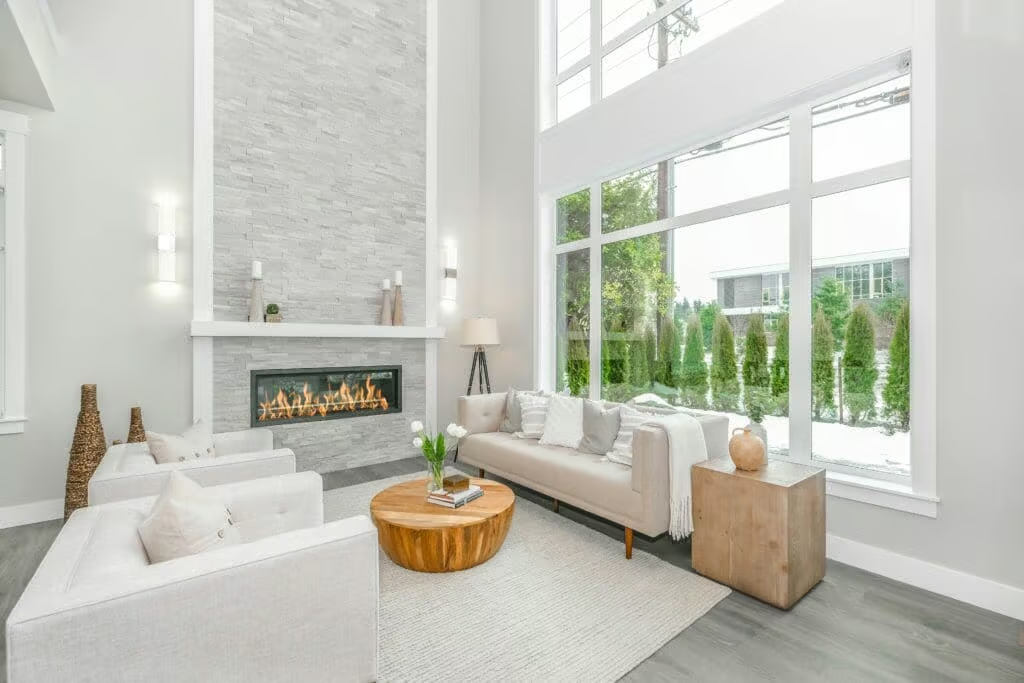
There isn’t one feature guaranteed to add the most value to every home. In general, improvements to kitchens, bathrooms, flooring, lighting, usable living space and curb appeal can make a property more attractive to buyers — particularly when they bring a dated home closer to what buyers expect in its local market.
The important part is knowing how far to go.
Kitchens and Bathrooms
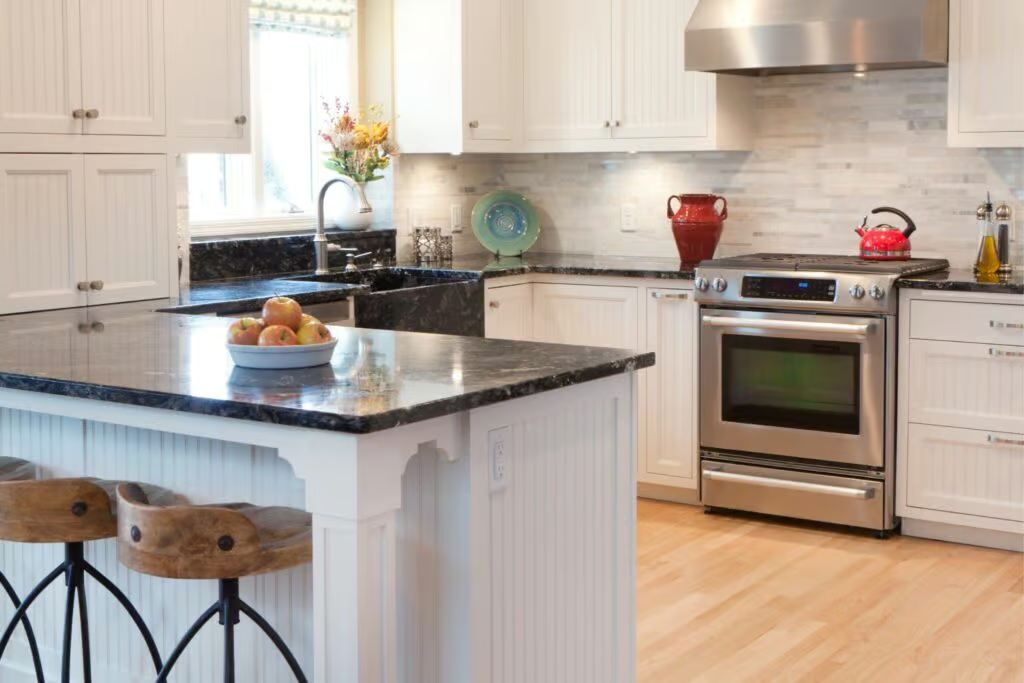
Kitchens and bathrooms tend to get plenty of attention from buyers, but that doesn’t mean they always need a complete renovation.
If a kitchen is functional and the cabinetry is in good condition, new hardware, updated lighting, fresh paint, a backsplash or countertops can make a surprisingly big difference. A full renovation may make more sense when the space is poorly laid out or noticeably out of step with other homes at its price point.
The same applies to bathrooms. Replacing dated fixtures, refreshing grout and caulking, updating lighting or installing a new vanity can make an older bathroom feel much more current.
In some homes, functionality matters even more than finishes. Adding a second bathroom, for example, may have more impact than creating a much more expensive version of one that already exists. The goal is to improve the home to suit its market rather than over-improve it.
Paint, Flooring and Lighting
When homeowners think about the renovations with the best ROI, they often picture much larger projects. But some of the most worthwhile improvements before selling can also be among the simplest.
Fresh paint can make rooms feel brighter and better maintained. Replacing noticeably worn flooring can create continuity throughout the home. Updated lighting can completely change how a space feels. A home that feels bright, cohesive and cared for often makes a stronger first impression than one with a handful of expensive upgrades surrounded by unfinished projects.
Finished Basements
A finished basement can be valuable when it creates genuinely useful additional living space. A family room, home office, gym, playroom or guest space can help buyers imagine how the home could work for them. But flexibility is important. A basement that can serve several purposes will generally appeal to more buyers than one designed around a highly specialized use. And, as with any renovation, quality matters. Buyers can usually tell the difference between a properly finished space and a quick cosmetic makeover.
Have more questions about selling your home? Check out these other blogs from our team!
- Why Is My House Not Selling?
- Is Staging Necessary in Today’s Market?
- When Is The Best Time To Sell A House?
Curb Appeal
The exterior is easy to overlook when you’re focused on kitchens and bathrooms, but it’s the first thing buyers see — both online and when they arrive for a showing.
Maintaining gardens, trimming overgrown shrubs, repairing walkways or steps, painting the front door and improving exterior lighting can all help a property feel more inviting without requiring an elaborate landscaping project. In Ottawa, where our properties have to look and function well through four very different seasons, practical exterior maintenance can go a long way.
Sometimes the Best ROI Renovation Isn’t a Renovation
If you’re planning to sell relatively soon, your best investment may be less work than you think.
Decluttering, repairing small deficiencies, touching up paint, improving lighting, and professionally cleaning and preparing the property for photography can sometimes have more impact than beginning an expensive renovation immediately before listing.
There’s also a risk in renovating specifically for an unknown buyer. You may choose finishes you love only for the eventual buyer to have completely different taste. Sometimes a well-maintained home with room for personalization is exactly what the market wants.
Before You Renovate, Know Your Local Market
This is where neighbourhood knowledge becomes particularly important.
A buyer looking at an older home in a central Ottawa neighbourhood may have very different expectations than someone comparing newer homes in Barrhaven or Kanata. In Manotick and Ottawa’s surrounding rural communities, buyers may also be considering wells, septic systems, acreage, outbuildings and exterior maintenance alongside kitchens and bathrooms.
Before committing to a major project, consider the gap between what your home could sell for today and what it could realistically achieve after the renovation.
There simply isn’t a universal list of the “best” renovations. The right investment depends on the house, the neighbourhood, your timeline and what buyers are responding to in your market.
Thinking About Selling? Start With a Conversation
You don’t need to have a moving date picked out to start planning.
Some of the best conversations we have with homeowners happen well before a home is ready to hit the market. It gives us an opportunity to walk through the property, talk about what’s worth addressing and, just as importantly, identify what may not be necessary.
Sometimes that means tackling a larger project. Sometimes it’s a short list of smaller updates. And occasionally, our advice is to leave something exactly as it is.
If you’re thinking about selling your Ottawa home — whether that’s a few months from now or a few years down the road — The Wright Team would be happy to help you figure out where your time and money are best spent.
Ready to start your selling journey? We’d be honoured to help.
Call 613-692-0606 to get in touch, or reach us by email at info@ottawahomes.ca.